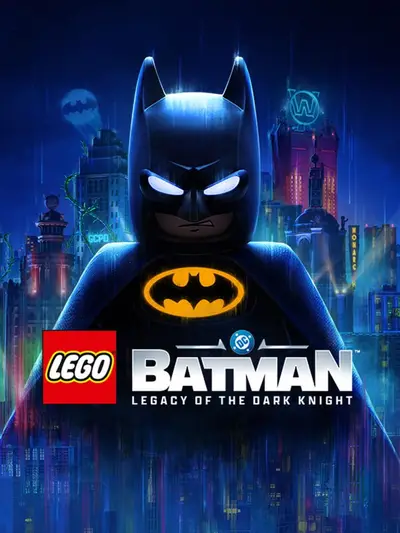
LEGO Batman: Legacy of the Dark Knight
86Quick answer
Quick answer
LEGO Batman: Legacy of the Dark Knight voelt als een verrassend volwassen, maar nog altijd speels eerbetoon aan Gotham’s bekendste wreker. De mix van vlotte gevechten, een sterke open wereld en slimme humor maakt dit tot een van de meest geslaagde LEGO-avonturen in jaren. Niet alles is even vernieuwend, maar de uitvoering is zo sterk dat de bekende formule hier zelden als een beperking voelt.
86: een sterk uitgevoerde, zeer plezierige Batman-ervaring die de bekende formule verfijnt tot iets dat opvallend dicht bij topniveau komt.
A Gotham City that finally feels alive
LEGO Batman: Legacy of the Dark Knight immediately understands what a Batman game needs: a city worth exploring, a hero who feels powerful, and enough playfulness to keep the mood from becoming too heavy. Gotham is not just background dressing here. It is a space that constantly invites movement and curiosity. A distant siren, a rooftop crime, a hidden puzzle in an alley, a collectible perched on a tower: the city keeps pulling you forward without drowning you in markers or busywork.
What stands out most is how confidently the game blends its systems. You glide across rooftops, jump into fights, switch into detective mode, and keep feeling like you are actually inhabiting Batman’s fantasy. The LEGO humor is still present, but the tone is a little more assured than in many earlier entries. That makes the game feel less like a parody of Batman and more like a sincere, affectionate interpretation that knows exactly how iconic the character is.
Gotham itself deserves special praise because it is built with real care. The streets have texture, the skyline has personality, and the landmarks are arranged in a way that encourages both navigation and discovery. It is the kind of open world that makes you glance at the map and then ignore it, because the city is interesting enough to follow your own instincts. That is a valuable quality in a game like this: it makes exploration feel like a choice rather than a chore.
Combat, puzzles, and momentum
The combat is one of the clearest upgrades. It is faster, cleaner, and more satisfying than in many previous LEGO games, with a rhythm that leans closer to an action-adventure than a simple puzzle romp. That does not mean the series’ puzzle roots are gone. In fact, the best moments come from the way the game keeps asking you to shift between fighting, building, scanning, and positioning. The puzzles are rarely punishing, but they give the game a healthy pace and make each area feel like more than a corridor of enemies and collectibles.
There is a pleasing physicality to the way Batman moves through encounters. Hits land with more impact, enemies react with enough clarity to make crowd control readable, and the game gives you just enough room to improvise without losing control of the action. That balance matters, because it keeps the combat from feeling automated. You are not just pressing through a sequence of animations; you are actively managing space, timing, and momentum.
The mission structure also works well. Big story beats are broken up by open-world detours, which keeps the experience from feeling static. There is almost always a reason to go one block further or tackle one more side activity. That makes the game very approachable for younger players and co-op, but it also gives veteran players enough momentum to stay engaged. Even when the objectives are simple, the pacing keeps nudging you forward.
Progression that supports the fantasy
Progression is not especially deep, but it is effective. New abilities and gadgets give you a steady sense of growth without turning the game into a checklist of systems. The design is focused on moment-to-moment enjoyment: every new tool opens up a few more options, but never in a way that demands a manual. That fits the LEGO formula, yet here it feels more refined and more tightly aligned with Batman’s fantasy.
Collecting and revisiting older areas remains part of the loop, though it is less exhausting than in some earlier LEGO titles. The world is appealing enough that returning to it does not feel like a chore, and the rewards usually feel worthwhile. Not every extra objective is thrilling, but the game gives completionists enough to chew on without smothering the main adventure. It is a smart compromise: enough content to keep explorers busy, but not so much that the game loses its sense of momentum.
That sense of progression also benefits from the way the game introduces new ideas at a steady pace. Rather than dumping systems on you all at once, it lets each mechanic breathe long enough to become familiar before layering in the next one. The result is a campaign that feels confident and well paced, even when it is drawing from familiar LEGO traditions.
Humor with more character than usual
One of the nicest surprises is how well the humor is handled. The jokes are still there, but they do not constantly undercut the atmosphere. Instead, Legacy of the Dark Knight uses the LEGO style to reinforce Batman’s mythology. Familiar scenes, motifs, and characters are treated with a wink, but rarely in a way that strips away their emotional core. That balance helps the game work both as a family-friendly comedy and as a genuine tribute to decades of Batman stories.
That sense of balance matters. Even when the game falls back on familiar structures, the presentation is strong enough to keep pulling you in. The blend of recognition and playfulness is exactly where this series is at its best, and here it is delivered with real confidence. The writing understands that Batman is at his most interesting when he is both mythic and slightly absurd, and the game leans into that contradiction instead of trying to smooth it away.
The fan service is also handled with care. References to films, comics, and television are woven in with enough restraint that they enrich the experience rather than overwhelm it. Long-time fans will spot plenty to appreciate, but newcomers are never left behind. That makes the game feel welcoming in a way that many reference-heavy adaptations do not.
Co-op and mission pacing keep it moving
Another strength is how well the game sustains its momentum. Mission design alternates between set-piece storytelling and smaller exploratory stretches, which keeps the experience from settling into a single rhythm for too long. That variety matters more than it might seem, because it prevents the open world from becoming repetitive and gives each chapter a distinct texture.
Co-op adds another layer of appeal. LEGO games have always benefited from shared play, and this one is no exception. Solving puzzles together, dividing tasks in combat, or simply causing a little controlled chaos while moving through Gotham gives the whole adventure extra energy. The game is clearly built with that social rhythm in mind, and it shows in the way objectives are framed and spaces are laid out.
Even solo, the pacing remains one of the game’s best qualities. It keeps moving, but not so fast that you miss the atmosphere. It gives you enough room to explore, enough combat to stay engaged, and enough story to make the journey feel meaningful. That balance is harder to achieve than it looks, and Legacy of the Dark Knight does it well.
The familiar formula still shows
Still, Legacy of the Dark Knight is not free from the usual LEGO habits. Some activities feel so familiar that long-time players will spot the solution before the game has finished setting it up. The game innovates more in polish than in fundamentals. That is not a deal-breaker, but it does mean the real surprise comes from execution rather than from a bold new direction.
The pacing also dips now and then when a strong story sequence gives way to a stretch of collectible hunting. The game remains pleasant throughout, but the momentum of its best moments is not perfectly consistent. Fortunately, those dips are brief enough that they do not seriously damage the overall experience. If anything, they mainly remind you that this is still a LEGO game at heart, with all the comfort and repetition that implies.
That familiarity will probably be a strength for many players. The formula is sturdy, and the game knows how to make it feel fresh enough through presentation, scale, and combat feel. But if you are hoping for a radical reinvention, this is not that kind of sequel.
Final verdict
In the end, LEGO Batman: Legacy of the Dark Knight succeeds because it knows exactly what it wants to be: a big, charming, and polished Batman adventure that refines the LEGO formula without losing its identity. It is not revolutionary, but it is impressively well made. In this series, that is often enough to put it near the top.
This is one of the best LEGO games in years: ambitious, atmospheric, and surprisingly mature in how it treats Batman. The formula is familiar, but the execution is strong enough to make that feel like a strength rather than a limitation. For fans of the Caped Crusader, it is a confident tribute. For everyone else, it is simply a very good action-adventure wrapped in LEGO charm.
Verdict
Een uitmuntende LEGO-Batman die vooral schittert door uitvoering, sfeer en ritme.
At a glance
Pros
- Sterke, soepele gevechten met een fijn actie-ritme
- Gotham voelt levendig, groot en uitnodigend om te verkennen
- Humor en Batman-fansservice zijn goed in balans
- Co-op en missie-opbouw houden het tempo prettig
Cons
- De formule leunt nog vaak op vertrouwde LEGO-structuren
- Sommige verzamel- en zijactiviteiten voelen voorspelbaar
Screenshots
More reviews
Other recent game reviews on GAME-scanner.
There are no other reviews to show yet.