

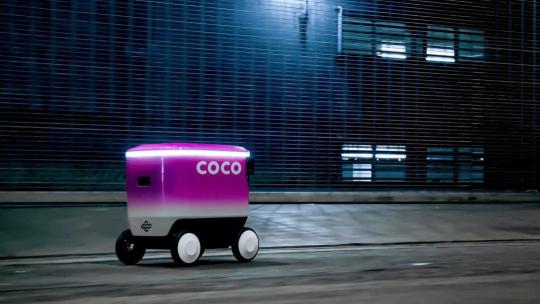
Niantic is leveraging data from Pokémon Go to enhance its geospatial AI project, Niantic Spatial. This initiative aims to create detailed digital maps of physical environments, allowing machines and AR technology to navigate with centimeter-level precision. Using around 30 billion images collected from Pokémon Go, Niantic is reshaping how machines understand real-world landmarks and environments. While players enjoy catching Pokémon, they may not realize their image contributions help form a Geospatial Model for potential applications in various industries, including delivery services and the military. Niantic's collaboration with companies like Coco Robotics demonstrates its commitment to integrating AR technology into real-world applications.
How is Pokémon Go contributing to AI advancements?Pokémon Go is providing Niantic with a vast collection of images that support the development of Niantic Spatial's geospatial AI, allowing for improved navigation and interaction with the physical world through advanced digital mapping.
Pokémon Go, launched in 2016, has been a revolutionary mobile game, encouraging players to explore their surroundings while capturing Pokémon. The game's success has significantly impacted how augmented reality is perceived and implemented in gaming as well as other industries, paving the way for innovations like Niantic Spatial. As players engage with the game, they unwittingly contribute to important technological advancements beyond just gaming.



Casey Loh
Casey Loh is a tech-savvy writer who specializes in the intersection of gaming and technology. With a background in computer science, Casey brings a technical lens to her reviews, breaking down the nuts and bolts of game engines, graphics, and AI innovation.
Read more articles from Casey Loh



Comments
Who knew all those blurry PokéStop photos would be training data for something this ambitious It's like we're crowdsourcing the matrix for AR without even trying.
It's wild how our casual Pokémon hunts are quietly building the backbone for next-level AR tech. Guess we're all unknowing beta testers for the future of digital mapping.