Epic Games Launcher preview: 5.47-second cold boot and 46% faster than Steam
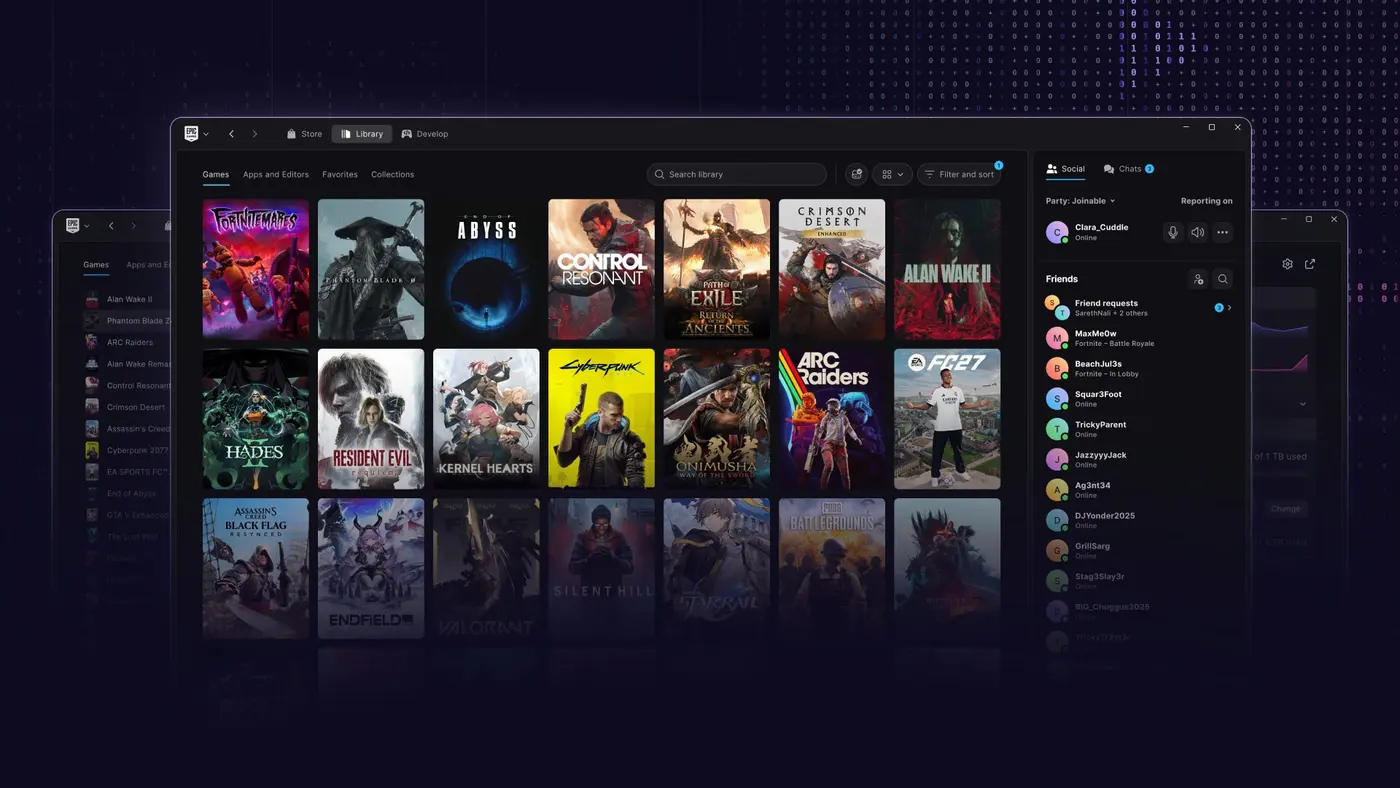
Epic Games has released a preview of a rebuilt Epic Games Launcher. Epic says it boots in 5.47 seconds and is faster in its own tests.
- According to Epic, the launcher cold boots in 5.47 seconds, which is 46% faster than Steam; reopening from the system tray reportedly takes 0.36 seconds, a 14% gain.
- The preview is still early in development and currently includes mainly store, library, social, and an Unreal-focused developer page.
What happened
Epic Games has made a preview of a new version of the Epic Games Launcher available. In an interview with IGN, Martin Keely said the launcher was rebuilt “from the ground up” on a new tech stack. Epic is presenting the version as a faster replacement for the current client and tying the rebuild to a broader modernization of the launcher.
The company says the new launcher is still early in development and “light on features.” According to the source, the preview does include the main essentials: the store, the library, social features, and a developer page focused on Unreal. Epic also says the launcher was built with the help of AI and “vibe coding.” That positions the preview not as a final release, but as an early public step in a rebuild effort.
On performance, Epic is sharing its own benchmark numbers. Cold boot is said to take 5.47 seconds, which the company claims is 46% faster than Steam. Reopening from the system tray is said to take 0.36 seconds, making it 14% faster than Steam. Those figures come from Epic itself and are not independently verified in the source provided. The Steam comparison is therefore an internal measurement from Epic, not an external test across different systems.
Based on the available information, the preview is meant as a downloadable test version of the new launcher. The source does not confirm whether all users can access it right away or whether Epic is limiting the rollout. It also does not specify which parts are still missing beyond the features Epic already mentions. What is clear is that the company is explicitly framing the new version as an early build, with a limited feature set and a focus on speed.
Timeline
2026-10-14: Epic Games releases a preview of the rebuilt Epic Games Launcher and says the version is still early in development.
2026-10-14: Martin Keely says in an IGN interview that the launcher was rebuilt “from the ground up” on a new tech stack.
2026-10-14: Epic says the preview includes store, library, social, and Unreal-focused developer sections.
2026-10-14: Epic shares benchmark numbers claiming a 5.47-second cold boot and a 46% speed advantage over Steam.
2026-10-14: Epic says reopening from the system tray takes 0.36 seconds and is 14% faster than Steam.
2026-10-14: Epic describes the preview as “light on features” and says the launcher was built with AI and “vibe coding.”
Background
The preview appears to be an early test version of a broader rebuild of the Epic Games Launcher. Based on the available information, it is not clear whether all users already have access or whether the rollout is limited. It is also not yet specified which features are missing beyond the parts Epic has already named. That makes the current version mainly relevant as a first look at the new technical foundation, not as a full replacement for the existing client.
The emphasis on a new tech stack fits the way Epic is presenting the launcher: as a rebuilt application that should load faster and return from the system tray more quickly. The cited 5.47 seconds for cold boot and 0.36 seconds for reopening are concrete numbers Epic is highlighting itself. Because the source does not include an independent measurement, it remains unclear how those results compare across different PC configurations, storage types, or background processes.
The mention of AI and “vibe coding” is also relevant to the context of this preview. Epic is linking the rebuild not only to speed, but also to a modern development approach. At the same time, the source does not make clear how much of the code or design was actually assisted by AI. The available information is limited to Epic’s own description and does not include technical details about the tools, workflows, or scale of development.
For now, the preview is mainly centered on the core components users expect from a launcher: store, library, social features, and a developer page around Unreal. That shows which parts Epic is prioritizing at this stage. The source does not mention a release date for a full version and does not provide a timeline for additional features. As a result, the preview remains an early demonstration of the new foundation and the performance claims Epic wants to make around it.