Alliance Arts cancels public demo of Drunken Goddess Reflux on October 16, 2026
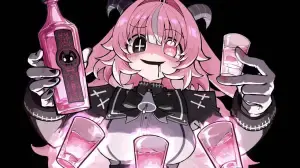
Alliance Arts has canceled the planned public demo of Drunken Goddess Reflux and will replace it with closed online sessions for a limited group.
The studio is replacing that demo with closed online play sessions for a limited number of players.
Alliance Arts says it is concerned the game could be copied or replicated quickly, including with generative AI, and that rules around posting and streaming would be hard to enforce.
What happened
Alliance Arts announced on October 16, 2026, that the public demo for Drunken Goddess Reflux will not go ahead. In its explanation, the studio said the game could be too easy to imitate before release. The announcement came from Alliance Arts’ official account and was repeated in the accompanying video, where the studio said copycat games have existed for a long time but that generative AI has made it easier to create a clone quickly.
The developer specifically pointed to generative AI as a factor that makes it easier to produce a clone. Alliance Arts also said it was worried that restrictions on posting and streaming demo footage would be difficult to enforce. The available information does not explain what specific rules the studio plans to use for the closed sessions, and no date has been announced for those sessions.
Instead of a public demo, the studio will hold closed online play sessions. Based on the available information, these will be for a limited number of selected players. The reporting does not give an exact participant count, an application process, or a schedule for a later public test. For now, the only confirmed details are that the public demo has been scrapped and that Alliance Arts is replacing it with a private online format.
Timeline
October 16, 2026: Alliance Arts announces via its official account that the planned public demo of Drunken Goddess Reflux has been canceled.
October 16, 2026: The studio says the demo will be replaced by closed online play sessions for a limited number of players.
October 16, 2026: In its explanation, Alliance Arts cites generative AI as a reason copycat games can be made faster than before.
October 16, 2026: Alliance Arts also says it is concerned about enforcing rules around posting and streaming demo footage.
October 16, 2026: The available sources do not mention a date, participant count, or further details for the closed sessions.
Background
Drunken Goddess Reflux is described in the reporting as an anime Russian roulette game. That description comes from the coverage surrounding the demo cancellation and shows how the game is being positioned in the discussion. The core of the story is not a change to the game itself, but Alliance Arts’ decision to cancel the public demo.
The demo dispute fits into broader concerns about copycat games. In the provided explanation, Alliance Arts says developers have dealt with imitation games for years, but that generative AI has made it easier to produce a clone. That wording is also repeated in the video description from Alliance Arts’ official post. It makes clear the studio sees the decision as part of a wider market trend, not just a reaction to one specific title.
The supplied sources also mention Needle in a Haystack as an example in the broader Steam copycat discussion. That example is used to illustrate how quickly similar games can appear. The available information does not include any concrete numbers on similar titles, technical details about the alleged copies, or a direct comparison between the games involved. Details about the closed online sessions are also missing, including the exact date, how players will be selected, and what rules will apply to sharing footage.
Alliance Arts’ official statement and the accompanying video are the only direct sources in the provided material for the cancellation and the replacement sessions. GameSpot’s coverage adds the framing of the game as an anime Russian roulette title and the reference to Needle in a Haystack. Together, those sources are enough to support the conclusion that the public demo was canceled over concerns about imitation, AI-assisted clones, and enforcement of content rules.
The information in this article is based on Alliance Arts’ official announcement and related reporting on the canceled demo and the replacement closed play sessions.